
The firewalls function as gates or gateways which regulate the access to permissible as well as forbidden internet operations within an encrypted network.
The term “firewall” comes from notion of physical walls that act to act as barriers.. They slow down the spread in fires until emergency services can be able to extinguish the fire.
However firewalls designed for security have been designed to assist from the management of internet traffic. They are generally designed to stop the spread of cyber attacks.
Firewalls set up “choke points”.. which funnel web traffic. Then they are reviewed according to the parameters specified by firewalls and then acted upon accordingly. Certain firewalls monitor the web and log connections within audit logs to decide what can be allowed or blocked.
A majority of firewalls work as security devices for areas.. The network that is considered private as well as the host device that it hosts.
They may be considered as security devices within larger scope of control on access to users. Barriers are typically installed at two locations either on designated network computers as well as computers belonging to users as well as other devices (hosts).
Whats the function for firewalls?
The firewall controls what web traffic can be allowed to pass through and what can be considered dangerous. The basic function of firewall is to ways of segregating the safe and trustworthy from untrustworthy. However before getting into specifics its helpful to understand the basic structure of the internet based network.
Firewalls are built to safeguard private networks as well as the devices that are part of them referred to as network hosts. Network hosts are the devices.. which communicate with the other hosts of the networks. They transfer data and messages between internal networks through external and internal connections with external networks.
Endpoint computers and devices utilize networks for access to the internet as well as to connect with other networks. Internet is however separated into sub networks also known as “subnets” to ensure security and security. subnets.. which are the fundamental are:
- Internet connected networks.. External to Internet generally it refers to the internet.. which is open or global or some additional extranets.
- The private network inside is the home network corporate intranets corporate intranets as well with other closed networks.
- Perimeter networks offer borders networks.. They are made up of Bastion Hosts computers hosting.. which are outfitted with security and are capable to withstand any attack from the outside. They function as safe security buffer between the internal and external networks. They also act as an external gateway for services provided by an internal network (i.e. servers.. which host FTP webmail VoIP.). Theyre safer than external networks however theyre not as secure as internal networks. Theyre not usually used in networks that are less sophisticated such as home networks but they can be used for intranets or corporate networks.. They are also of national nature.
Screening routers are gateway computers.. they were specifically designed to be use on networks that are separated from the networks. Theyre also referred to by the name of home firewalls.. They are situated in networks. Two of the most frequently used segments are firewalls that screen as well as the subnet firewall.. which is screen based:
* The firewalls used for screening hosts use single screening router.. It can be shared among interns as well as external networks. Two networks.. which are utilized to screen can be classified as subnets.. They comprise the model.
* Subnet filters.. which are screen that employ two different routers to screen the first one is one.. it is an access router connecting exterior and perimeter network. The other can be called”the choke router that connects the both the perimeter network and internal network. The router is responsible for three subnets per.
The edges of networks and hosts machines could be homes to firewalls. To accomplish this firewalls can be created between one PC and also the connection to private network.
* The firewalls that are used by networks are the result of the implementation of all firewalls that are connected to internal and external networks. They manage outbound and internal networks and differentiate the public internet networks such as the internets with global access from internal networks like Wi Fi in homes corporate intranets and intranets.. which are that are national in their they are national in. They can be in the forms of specific apparatus.. They can comprise the hardware that is specifically designed for it as well as software. It is also possible to use virtual.
* Host firewalls commonly referred to software firewalls can be utilized to protect personal devices as well as other devices of private networks for the purpose of the different network devices from each other. Hosts and devices are equipped with customized management for all data that flows through them which is specifically based on computers. Host firewalls operate locally on devices as OS services or as an endpoint protection application. Host firewalls are also able to go deep into web traffic to filter it on HTTP and other protocols for networks.. which allow for access to the content that is sent into your device does not limit it to where it originated from.
Network firewalls must be set up to protect for variety of connections. Host firewalls can be adjusted to meet the specific demands of the any particular device. Host firewalls on the other hand require more effort to customize and are good option for comprehensive control systems. Utilizing both firewalls on each site in one location makes it ideal to create security layers.. It is also multi layer.
filtering internet traffic via firewalls uses set or learned rules to permit and block requests to join. These rules decide which firewalls are used to manage traffic in your network private and private computer systems. No matter what all firewalls will be used to block your online traffic using combination of these regulations:
* Source: Where an attempted connection originated from.
* The goal is the the location from which an attempt to join was planned to take.
* Description: How does an attempted attempt to connect send.
* Packet protocol: What language.. this connection employs to communicate the message. In the network protocols.. host use to communicate with one another. The protocols TCP/IP are used for communication across the internet as well as in intranet and sub networks.
* Protocols used by applications: Common protocols include HTTP Telnet FTP DNS as well as SSH.
Source and destination is exchanged through the internet protocol (IP) addresses and ports. IP addresses are distinct names for each device on host. Ports are the sub levels of hosts sources and destinations devices similar to offices within greater structures. The ports are usually assigned specific functions therefore protocols as well as IP addresses with strange ports or ports that are not activated might be problem.
Through these codes of identification firewalls are able to determine whether connections are going to be removed by silent or error message to the sender or forward.
Different kinds of firewalls
Different types of firewalls use different ways of filtering. Though each was developed in way to make it better than the previous generation of technology used in firewalls.. The technology that lies the core of them is how it has evolved over time.
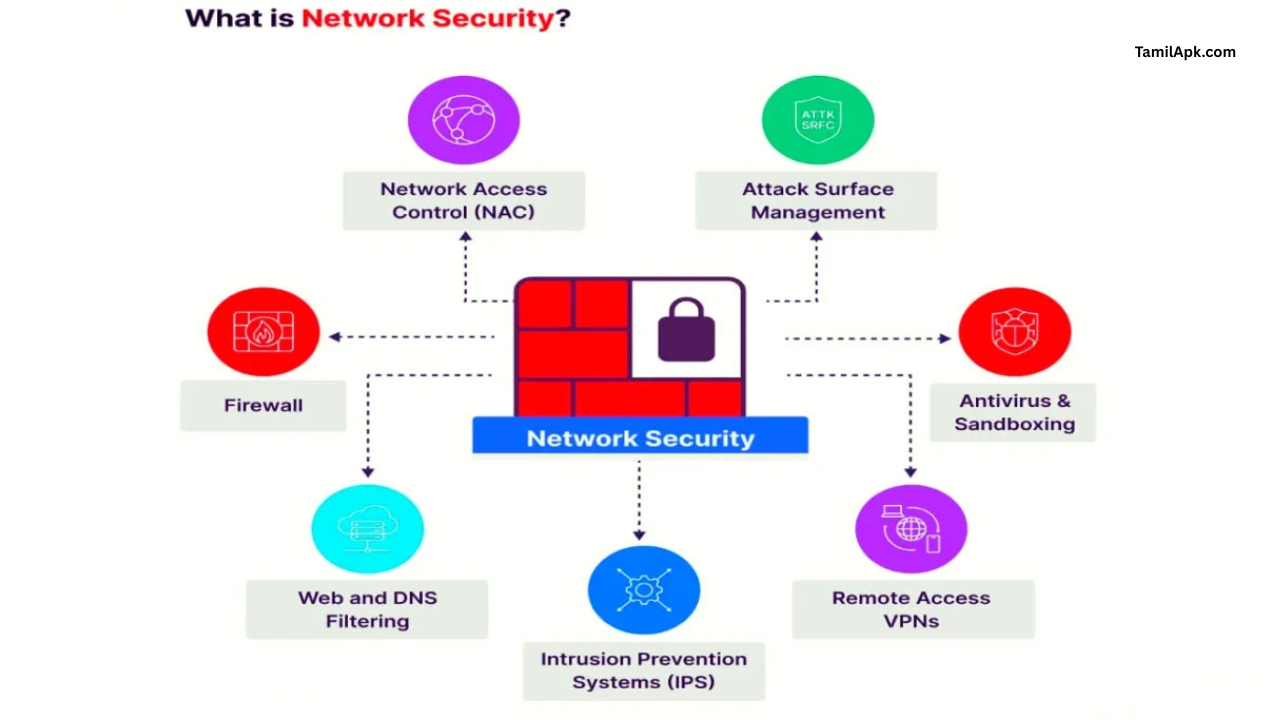
Different kinds of firewalls can be distinguished by their distinct way of working
- Connectivity tracker
- Filtering rules
- Audit the logs
Every type of firewall operates on different level in the normal communications models called.. which includes the Open Systems Interconnection model (OSI). OSI model gives clear view of the way firewalls work with each other and connect.
Static Packet Filtering Firewall
The static packet filtering firewalls also called stateless firewalls operate in the OSI layer in the network (layer 3). They provide basic filtering by the examination of every single packet of data that are sent over the network based on where the data originates from and also the location they are seeking to go.
Its crucial to know.. that previous recognized connections cant be examined… which is.. that each connection must be scrutinized each data packet.. That is the data packets that are sent.
Filtering depends heavily on IP address port as and packet protocols. Firewalls on the most fundamental level prevent two network from connecting the absence of authorization.
The filtering rules are formulated using handwritten access control checklists. These rules are very rigid and can be difficult to eliminate unwanted traffic and not degrade the functionality of network. The static filtering procedure requires frequent adjustments manually in order to function effectively. Its possible to do this for small networks however it could become problem to manage larger networks.
The inability of recognizing application protocols means.. the information contained in the packet cannot be seen. Without reading capabilities firewalls.. that block packets provide only small quantity of security.
Circuit Level Gateway Firewall
Circuit level gateways function at sessions level (layer five). They test for working connections during connection attempts. If theyre working properly theyll allow connections to continue accessible between networks. Firewall ceases monitoring connection after this occurs.
Other than how it manages the connections circuit level gateway can have the same effect as proxy firewalls.
Connections that are not monitored can be dangerous since genuine methods could open the network for an intruder access to the network without hitch.
Stateful Inspection Firewall
Stateful inspection firewalls commonly referred to as dynamic firewalls for filtering packets are different from static filtering in their ability to monitor their current connections and keep track of previous connections. They began by working in their layer of transport (layer 4.) but nowadays theyre controlled by multiple layers which include those of layer seven applications (layer seven).
Like the firewalls.. which use static filters stateful inspection firewalls allow or block the flow of traffic that is compatible with specific technological characteristics like certain protocols IP addresses or ports. However they are also able to detect and later sort based on the state of connections in the state table.
The firewall filtering rules are changed as result of connections that have been which are recorded in state table on the router.. which filters.
In the majority of cases filtering decisions are typically based on administrator policies to set up firewalls or computers. state tables allow these dynamism firewalls to make decisions on their own.. which depends on the previous interactions that theyve gained from.
In this case specific types or types of information.. which have created problems earlier on could be removed within the near time. The flexibility of stateful inspection has helped make it one of the most popular types of security guards available on the market.
Proxy Firewall
Proxy firewalls are also known as firewalls on the levels of application (layer seven) They stand out due to their capacity to filter and read applications protocols. They integrate inspection at the app level which is known as deep packet inspection (DPI) as well as stateful inspection.
The proxy firewall could be near to being physical barriers as you are capable of obtaining. As opposed to other forms of firewalls it works as an additional two hosts.. They are capable to connect external networks and internal hosts computers. The second host functions as representative (or proxy) for each network.
Filtering is based on application layer not only IP addresses for ports and port numbers. It also uses fundamental protocols (UDP ICMP) as firewalls are built on packets. Learning and comprehending FTP HTTP DNS along with other protocols permits thorough examination as well as cross filtering that takes into account wide array of characteristics of information.
Similar to security guard at the door it scrutinizes and analyzesincoming data. If no issues are found the data is allowed to be transferred to the person connected to it.
The disadvantage of this kind security measures is.. the fact that it typically can affect information.. but isnt threat that could cause functional delay.
Next Generation Firewall (NGFW)
Every new threat requires greater security so firewalls that are more modern stay in the forefront by combing features.. Traditional firewalls includes network intrusion prevention system.
Security firewalls of the future.. which are targeted against threats are designed to identify and analyse specific dangers like advanced malware on the all scales. The majority of them are used by companies and network administrators. offer comprehensive solution to the elimination of threats.
Hybrid Firewall
The meaning implied by the title “hybrid firewall” implies.. they employ various types of firewalls in private networks.
Who was the first to create firewalls?
The evolution of firewalls must be viewed as continuous. Because it is constantly evolving and there were many individuals.. who contributed to its creation and its development.
In the period from 1980 to the mid 90s every developer created diverse components that were related to firewalls and variants before the product was the basis for all contemporary firewalls.
Brian Reid Paul Vixie & Jeff Mogul
In the latter half of 1980s Mogul Reid mogul Reid and Vixie was all part of Digital Equipment Corp (DEC) for the development of the system for filtering packets.. This could be utilized in future firewalls. It was the beginning of securing external connections before connecting them to internal networks via computers. Though some would believe this to as firewalls first technology however it actually was more than technology element.. which was employed in conjunction with firewalls for years to be built in the future.
David Presotto Janardan Sharma Kshitiji Nigam William Cheswick & Steven Bellovin
The latter half of the 80s and into the 90s various employees of AT&T Bell Labs researched and developed the first concept of gateway that was circuit level. This was the the first security system.. capable of confirming and permit continuous connections instead of authorizing repeatedly each moment data packet was transmitted. Presotto Sharma & Nigam designed circuit level gateways from 1989 and the year 1990. The gateways were followed closely by Cheswick and Bellovins initiatives using firewall technologies in the year 1991.
Marcus Ranum
Between 1991 and 1992 Ranum created security proxy services during DEC that became an integral element of the first application layer firewalls specifically proxy based Secure External Access Link (SEAL) product. The product was further developed from Reid Vixie & Moguls efforts in DEC and also the its first commercially accessible firewall to be released.
Gil Shwed and Nir Zuk
From 1993 to 1994 Check Point companys founder Gil Shwed and the prolific designer Nir Zuk played significant roles in the development of the most popular and user friendly firewall known as Firewall 1. Gil Shwed invented and filed U.S. patent for stateful inspection in 1993. This was followed by Nir Zuks research and development to design the user friendly interface for 1994s Firewall 1.. which proved crucial in the expansion of firewalls at home and at work in the near future.
They were essential to the creation of firewalls that is used today each of which is used to play variety of roles in security solutions.
The significance of firewalls
Whats the purpose of firewalls? What is its purpose? The networks.. which arent secure are susceptible to intrusions seeking to access the systems. If its harmful or not the activity of your network should be observed.
Connecting personal computers and computers and the internet could bring many advantages including the ability to collaborate between other users through the combination of resources and greater creativity. However it is cost in total security of the devices and networks. Hacking fraud and theft online are the of the most frequent threats.. People face should they be exposed while connecting their devices to networks or the internet.
The network of malicious attackers and their devices are easily found and quickly accessible they could be vulnerable to continuous attacks. Internet connectivity that is 24/7 increase the chance that this happens (since your network can be available anytime).
Protective security is vital to all networks. Networks are protected from all threats with firewalls.
What does firewall security accomplish?
What is firewall? What are the threats that firewalls protect against? The idea behind firewalls for security for networks is to reduce threats to networks only one source of communication. Instead of every host in the network connecting to the bigger internet every communication has to first get through the firewall.
Since this happens with reverse firewalls they can be used to stop and block unwanted traffic from getting in and exiting. Additionally firewalls help keep track of the attempts made to connect Internet connections in order to improve security awareness.
As result traffic filtering has become standard practice for owners of networks that are private.. This may result in custom designed scenarios to use firewalls. Common use cases involve managing the following elements:
* The infiltration of criminals Connections that are not wanted by an unknown source may be blocked. This stops eavesdropping as well in the case of Advanced persistent threat (APTs).
* Controls for parents Parents are able to block their kids from accessing explicit web content.
* Internet browsing at work is prohibited: Employers can prevent employees from connecting to on corporate networks in order to gain access to particular services as well as contents such as social media.
* Intranets.. they are controlled by the national government Governments can impose restrictions on the access of citizens within country access to Internet related material as well as any other service that is likely to discord with the nations policies or its values.
They arent so effective in these areas:
- Exploiting legitimate network processes Firewalls cannot understand human motives therefore they cant tell the legitimacy of connection.. which is legally constructed was created for use by malicious people. In this case the fraud of IP addresses ( IP Spoofing) occurs due to firewalls.. which do not examine source and destination IP addresses.
- stop connections.. which do not pass through firewalls firewalls.. which operate only on network cannot stop internal threats. Network firewalls like host that use firewalls based on hosts will need to be part of the perimeter firewall to separate your network and stop the spreading from internal “fires.
- provide adequate protection against threats such as malware While connections.. with malware are blocked in the event that they arent allowed However connection that is acceptable could be threat onto your system. If your firewall is unable to identify connection that is not trusted because the fact that it is not properly configured compromised or hacking its advised to install an anti virus security application to get rid of any malware.. which is able to infiltrate.
Firewall examples
The use in the real world of firewalls has generated criticism and the praise of many. There are many successes in the field however this kind of security must be employed in way.. which is safe in order to safeguard against security vulnerabilities. Additionally firewalls are recognized for their ability to trick users.
Great Firewall of China Internet Censorship
Since around the year 2000 China has been home to its own internal firewalls that are used to create tightly controlled intranet. They enable the creation of unique version of the internet within the the country. They accomplish this by preventing certain products or services from being accessible through the internet.
The surveillance and the censorship policy in China permits continued denial of speech as well as protecting the public image. Furthermore Chinas firewall allows the authorities to limit access to online services for local business. It also makes certain aspects such as the search engine and the use of email services much easier to regulate in the direction of goals of the government.
China has seen constant demonstration within the country over the censorship practice. The use of virtual private networks as well as proxy websites to get around the firewalls has given enough citizens the ability to voice their grievances.
Covid 19 U.S. federal agency compromised by remote based work security vulnerabilities
The incorrect setting of the firewalls was one of the many security vulnerabilities.. which contributed to an unknown United States federal agencys breach.
Its thought.. that nation state actor exploited variety of holes in security U.S. agencys cybersecurity. One of the problems that they have reported regarding their security their firewall had the ability to gain access to numerous ports outbound that were not open for traffic.
In addition it was poorly maintained and creating issues for networks it may have encountered problems that were not previously known to those that were remotely managed.
After being inside the attacker behaved with manner.. which showed an explicit intention to utilize every other avenue to attack different agencies. This type of attack is not limited to an company at risk of attack but many others as well.
U.S. The Power grid operator firewall.. which isnt patched can be being exploited
In the year 2019 United States energy grid operation company was struck with Denial of Service (DoS) security vulnerability that hackers exploited. The perimeter firewalls became trapped in an exploit loop around 10 hours.
The problem was later identified to be caused by firmware vulnerability in firewalls. The standard method of reviewing updates prior to when the time they are implemented was not established which led to delays in updates and the resulting security issues. Security issues were not the cause of major intrusion into the network.
It is reminder to make periodic updates to software. Without them firewalls could be more secure function.. which could get at risk of being compromised.
How can you utilize security for firewalls?
An effective setup and ongoing maintenance of your firewall are crucial to make sure.. the network safe. Here are few suggestions to guide your firewalls the best security practices of your network:
- Always update your firewall as soon as you can. Firmware patches and software should ensure your firewall remains up to recent to safeguard against any emerging vulnerabilities. Users of personal and home firewalls generally can upgrade at any time. Larger organizations may have to check the for compatibility and configuration of their network prior to making changes. However all companies should be in position to guarantee.. that any updates are completed promptly.
- You must ensure that you are using antivirus security These arent designed to protect against malware or virus. Malware could penetrate security measures and firewalls. It is therefore essential to use security program specifically created to block and take out threats. Kaspersky Complete Securitycan ensure your protection across all of your devices at home and our many security tools for commercial use can protect any hosting network.. Youll need to ensure that your network is secure.
- Block ports that are accessible as well as hosts with an allow list. default to prevent access to inbound traffic. Limit outbound connections as well as inbound connections to strict whitelists of IP addresses.. That are secure. Limit access rights for users only when they are required. It is easier to protect yourself with access granted only when needed rather than to revoke access or limit damage after an incident.
- Segmented networks moving laterally by risky individuals poses serious threat.. This risk can be reduced by limiting inter commuication between.
Make active redundancies available on your network to limit downtime. Backups of data on network hosts as well as crucial systems help protect against the loss of data and the loss of productivity during an event.